Transportation Emissions:
For most of us ‘transportation emissions’ represent a significant portion of our carbon footprint. These emissions are from driving our vehicles or flying on planes.
Tracking transportation emissions requires knowledge of how far we drive, and the mileage efficiency (miles per gallon) of our vehicles.
Tracking our Vehicle Miles Traveled (VMT):
I have been tracking how many miles I drive each year for the last 40 years. I simply record the odometer readding of my car each year on Jan 1. This give me miles per year which I can then find the average miles per month or miles per day. Divide my annual mileage by 365 to get the average miles driven per day.
Example: 11,047 miles per year divided by 365 = 30.2 miles per day
But you don't have to wait for a year to learn how much you drive. You can track weekly or monthly mileage and use that estimate. Simply set your trip odometer to zero, note the date, and start driving. After 14 days or a month, check your odometer again. This gives the miles traveled in x amount of days. Divide the miles by the days and you get miles per day.
Determining Miles Per Gallon
The next thing to calculate is your vehicles efficiency or miles per gallon. There are several options for doing this.
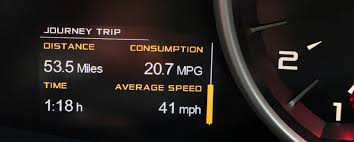
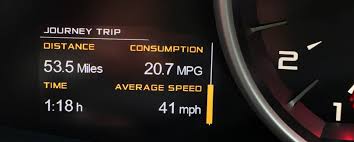
Option 1: Most newer cars have a miles per gallon listed on the dashboard or somewhere in the dashboard setting. These give you historic miles per gallon and the miles per gallon on your current trip.
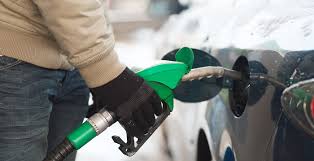
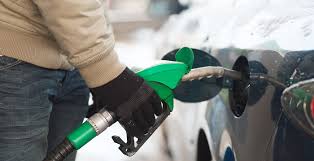
Option 2: Fill your car with gas. Set your trip odometer to zero. Drive until you are down to 1/4 tank or less. Fill up your car again with gas and note the miles on your trip odometer and the gallons of gasoline you used. Divide the miles by the gallons to get mpg.
If you are driving an electric vehicle I am certain it has a dashboard view for miles/kWh or kWh/mile.
Now that you have your mileage and efficiency you can calculate the carbon emissions from your vehicle.
Gas powered vehicles:
To calculate the emissions from your vehicle divide the miles traveled per day by the miles per gallon to get the average gallons of gasoline used per day
Example: 30.2 miles per day / 21.8 mpg = 1.37 gallons of gasoline per day
To determine the CO2 emissions from the burning of this gasoline, multiply the gallons per day by 8.8 kg CO2/gallon to get the kg of carbon dioxide emissions per day.
Example 1.37 x 8.8 = 12.1 kg CO2 emissions per day
Electric vehicles
To calculate the emissions from your EV divide the miles traveled per day by the kWh per mile for your vehicle.
Example: 30.2 miles per day / 3.25 miles/kWh = 9.29 kWh per day
To determine the CO2 emissions from production of the electricity you used, multiply the kWh per day by 0.346 kg CO2/kWh to get the kg of carbon dioxide emissions per day.
Example 9.29 kWh/day x 0.346 kg CO2/kWh = 3.21 kg CO2 emissions per day.
If the calculations are hard for you send me a note and I can help you.
Transportation Emissions: Flying
Flying can be a signficant contributor to our carbon emissions. Every mile we travel on a plane emits 0.17 kg CO2 per mile. Therefor to calculate our emissions from flying, multiply your miles traveled per year by 0.17 kg CO2/mile to get kg CO2/year from flying.
To find out how far you have traveled use this website or (xxx need to find a website without so many adds.)